Showing posts with label Indian Style. Show all posts

Wednesday, April 2, 2014

INDIAN CUISINE: Paratha (Parantha)

Paratha or parantha is Indian flatbread. The most characteristic feature of parathas are layers of the dough - crispy from outside and soft ones inside. This is the reason why it is a bit more difficult to make parathas than rotis or chapatis - it takes some practise to learn how to make the layers and at the same time to be careful that the bread puffs. However, there are a few types of paratha among which each of them goes well with any kind of vegetable dish, lentils, rice, soya chunks or meat. Some will require more skills and practise, some less. Parathas will usually be made fresh right before the meal.
~°~

Paratha is a type of Indian unleavened flatbread. Traditionally parathas will be made with Ghee - however, you can use any oil or butter instead of it. While simple roti/chapati dough is made with only two main ingredients - flour and water - into paratha dough we add some ghee/oil/butter as well. But on the other hand, even if you do not add it into the dough (suppose you are not able to eat or you are avoiding extra grease for some other reason) - parathas will turn out just fine. The key point is not to put grease into the dough but between the layers of the dough. The dough should be soft but firm and not sticky. The amount of the ingredients is not so important - it depends on how much and how big parathas you want to make. Slowly start adding water into the dough (and a few table spoons of grease). When the dough is not sticky anymore and it is soft, let it rest for around 10-15 minutes.

Corn - Wheat Paratha Dough
Corn-wheat Paratha Dough

Layered parathas are the most simple to make - though it takes practise to perfect the technique. If you are making parathas for the first time, give yourself some time. If you have already mastered puffing rotis/chapatis earlier, then this will not be a big problem for you. This layered paratha is meant to be the simplest because the layers are simply made by folding the rolled out dough. First of all, the dough needs to be rolled out in a round shape, just as if you would be making a roti. Then you take a bit of grease, traditionally ghee, and spread it thinly on the rolled out paratha. You fold it once and fold it again that you get a nice little triangular shape. When you have rolled all of your parathas like this, you heat the pan on high or maximum temperature and roll out the triangles. Rolled out layered paratha is then put on the pan. You have to wait a bit, until the bubbles become visible on the surface, and turn it over. Once you have done than, take  maximum one half of tablespoon of grease and gently spread it on the top side of the paratha. Gently press paratha where there are no bubbles. Flip the paratha and do the same thing once again. Paratha should be puffed at this point.

Simple Layered Paratha

Another way of making parathas is a bit more difficult but once it becomes a habit, it goes smoothly. This one is called lachha paratha and it has more than 3 layers. The procedure is the same as simple layered paratha until the folding point. When the grease is thinly spread on rolled out paratha, you sprinkle it with flour and try to spread it evenly with table knife. The other easier option is to have a plate with flour next to you and just dip that side of paratha into it. After that, the paratha has to be folded like a hand fan - folds are made by folding the dough back and forth. This way you should get a layered stick which you stretch a bit and fold it in a spiral, kind of like a snail's house :) when you are done with all parathas, you roll them out and fry them on the pan in the same manner.

Rolled Parathas
Rolled Parathas

At last, there are stuffed parathas. There are many types of stuffing you can use. Mostly they will be mashed vegetable or lentils, sometimes even spices. The stuffing will be like an inside layer itself. the procedure is again the same until the folding part. Instead of folding you will be adding the stuffing in the middle of the rolled out paratha. Cover the stuffing with the rest of the rolled out dough. Once you have done this to all parathas, gently and softly roll them out. Be careful not to break the dough - else the stuffing will come out. Apply grease from both of the sides of the stuffed paratha on the pan in the same way as already described.

Parathas with lentils and fried potatoes

These are the three basic and most common ways of shaping and making parathas. Any flour can be used for the dough as long as it is finely grinded. You can also use harsh corn flour but make sure that at least one third of the dough is wheat flour. If not, the dough will be breaking in dry pieces and it will be difficult, almost impossible, to roll it and make layers. You can also use rice flour if you are gluten intolerant. You can add grease in the dough as well as salt - but it is not compulsory as parathas will turn out just fine. It is the technique that matters the most. The rest can be adjusted up to your preferences and health condition.
Parathas can be eaten as breads along with the other dish, alone with a gravy or sauce or it can be used as a roll, just like tortillas. They can be also made in different shapes - triangular, round, squared etc.

Monday, March 3, 2014

Indian Script : DEVANAGARI

Devanagari is one of the scripts used in India. Today it is officially used for writing Hindi, Sanskrit and Marathi. If you are planning to visit India, this is the script you will most probably see everywhere - on boards, billboards, panels, signs etc. In this article you can learn more about devanagari and how to write/read it.

~°~

Devanagari is an old Indian script. It derived from even older script brahmi (used on king Ashoka's edicts who converted to Buddhism after a heavy bloody battle) which derived from Aramaic script. This means we can trace back the origins of devanagari all the way in to early centuries BC. The earliest texts written with devanagari were composed in 8th century. The name, devanagari, consists of two Sanskrit words - deva (God, deity) and nagari (nagar=city; nagari (F)=of the city, town) which together form one meaning - (the script = lipi) of god's city (F). It is written from left to right and there is no difference between upper- and lowercase letters

Devanagari is a phonetic and syllabic script. That means it is written mostly as you read it and every consonant will come with a vowel, in this case a short vowel a. Therefore it is not quite correct to call devanagari as an alphabet. Some authors of Hindi grammar books say that devanagari is the most scientific script. The reason for that is the order in which letters (or syllables) are put. Letters are distributed according to their place and way of articulation. The order they are put in is called as varnmala - garland of letters. If you try to speak the letters you will notice many regularities on your own as well.

Vowels are written in two ways. the way of writing depends if they follow a consonant or not. Consonants are always written in the same way except when they are in clusters. Here you can briefly see the rules of writing devanagari. Handwritten devanagari is a bit different, however, not much different. The line above the letters is one of the most characteristic features of this Indian script. 


Hindi alphabet script devanagari
Devanagari - vowels and consonants

hindi devanagari vowels
Devanagari - vowels

Although it might seem difficult to learn devanagari because there are so many letters, it is actually no different than any other script. You can start out with writing down your own name - later you can frame it and put it as a decoration (Make Your Home More Indian). Once you get it right, you will be able to write it and read it just as fast as you are reading this article right now. And after all, it is quite cool once you come to India knowing you can read the menu in devanagari in a restaurant or boards with the name of the cities!


Thursday, February 27, 2014

Happy Mahashivratri!

To all our readers from India and other corners of the world, especially to Hindus but also to people of other religions - Happy Mahashivratri! :)

OM NAMAH SHIVAYA

~°~

Shiva Pashupati Bholenath
Lord Shiva


Thursday, February 13, 2014

What is - EKADASHI?

Ekadashi is the 11th day of each half of the month in the Vedic lunar calendar. The word is of Sanskrit origin and it actually means "11". Roughly said, Ekadashi occurs twice a month. Hindus, especially devotees of Lord Krishna, fast on this day.
~°~

The fast itself does not have to be very strict. The key point is to praise the Lord Krishna and devote the day to chanting, praying, reading religious texts and similar acts. The fast is done by avoiding eating grains, beans and anything made from this sort of food - bread, pasta etc. All the fruits (fresh and dried) are allowed along with some vegetables, spices and other things. Therefore, some people would pick to fast on fruits and water, some only on water while those who can - might even go without water. Some people would also avoid grains or any kind of food a day or two before Ekadashi so that there would not be any remains of this particular kind of food in the stomach/guts.

As it was mentioned already - the key point is to praise the Lord Krishna and devote the day to chanting, praying, reading religious texts and similar acts. By doing a fast, a person dedicates more time to that during the day. The fast is like an instrument how to do it rather than just being the purpose to itself. Ekadashi is the day devoted to God and ourselves as well. On this day some might go to temple or local Hare Krishna community and celebrate Ekadashi by singing and chanting, while others do it in silence of their minds in nature or at home.

Of course, being a Krishna devotee is not a "must" for doing Ekadashi. Many people of other religions do it as well and praise God or simply devote the day to themselves - as we are all one God's creation, each of us carries a divine light inside. Those people would rather meditate, do yoga, pray or simply pay more attention to respect other people around themselves and do good deeds than chanting Lord Krishna's name. Being a better person and do good things for a good cause is always right.

Ekadashi starts from midnight and continues the whole day till the sunrise of the day after. There is usually a certain point of time when you should stop the fast by eating a bit of grains. The rest of the day is up to you. It is always good to check a website of your local Hare Krishna community to see the exact date and time of Ekadashi for your time zone. Along with that it is also recommended to plan out the meals a day or two before Ekadashi according to the allowed food.

 Have you ever fasted on Ekadashi?
Let us know about your experience!

Meditation Ekadashi
...thank for your existance


Wednesday, February 5, 2014

How to make Bindis at home?

Bindi is an important part of  Indian Jewelry. There is no Indian Hindu women who has never worn a bindi - and every Hindu man at least once as well. Once you decide on how to pick a perfect bindi according to your face shape (Perfect Bindi and How to get Bindis) you may try out these easy tips on how to make bindis on your own! You can wear bindis at home, outside, during special occasions or simply anytime you feel like. If there is no shop near your place that sells bindis, you cannot order them online or do not have a friend who could get them for you from India - these tips will help you a lot.

~°~

What you will need are various rhinestones, eyeliner - in different colours, glitter etc. Aluminium foil , glue and eyelash glue!
You can get each product you need for making your own bindis very easily. Most of them can be bought in a local beauty shop. You can look up for rhinestones and glitter at the nail care section.

Instructions:
Cut aluminium foil into a small shape. Pick any shape you like or the shape that matches your face structure. Stick some glitter and/or rhinestones on the foil as you like. Be creative and try your best. For this step use the glue or eyelash glue, both are fine. With eyeliners of different colours you can colour the foil as well. If your rhinestones are transparent, this is how you can make them look colourful. Once you are done with your bindi, stick it between your eyebrows or slightly above by using the eyelash glue! Be careful not to use any other glue which is toxic and can damage your skin.

You can also use your eyeliners to make small dots or some other small shapes around your bindi or above your eyebrows. 

If you are just too lazy to make a whole bindi or you are not as creative, you can use only eyeliner to draw a dot, tear or any other shape you like. Moreover, put the eyelash glue directly on a rhinestone and stick it as a bindi. Traditionally bindis were just a colour between eyebrows anyways and even today people will have bindis of such type on festive occasions.

Check out Aishwarya Rai's very simple beautiful bindi ornaments.

Aishwarya Rai - Bindi

Sunday, January 26, 2014

Happy Republic Day India!

Happy Republic Day to all India lovers out there!

~°~

Indian anthem:

Jana-gana-mana-adhinayaka, jaya he

Bharata-bhagya-vidhata
Punjab-Sindhu-Gujarata-Maratha
Dravida-Utkala-Banga
Vindhya-Himachala-Yamuna-Ganga
Uchchala-Jaldhi-taranga
Tava shubha name jage
Tava shubha ashish mange
Gahe tava jaya-gatha
Jana-gana-mangala-dayaka jaya he
Bharata-bhagya-vidhata
Jaya he, jaya he, jaya he
Jaya jaya jaya, jaya he!


The anthem was written by a Bengali writer and Nobel Prize winner - Rabindranath Tagore.

Rabindranath Tagore


Saturday, January 25, 2014

Ghee - Clarified Butter

Butter is well known on Indian subcontinent for centuries. Even in Vedic era butter used to be brought as a present for gods - it was used in small sacrifices. Today in India, along with butter as we know it, Indian people also use Ghee - clarified butter. 

~°~

Clarified butter is butter melted and boiled on light fire. By doing so the water from butter evaporates and dirt (such as milk fat) in the shape of foam that is gathered on the surface can easily be removed.
Ghee has a higher smoking point. That means it wont burn that easily while cooking so you can use it as oil. In general you can also use it in situations you would use normal butter. Even when making sandwiches.
Fresh clarified butter is in liquid form while at the room temperature it will be solid.

Ghee - Clarified Butter

You can also use Ghee for making Kajal (Kohl)!
Kajal is make up that Indian girls, and some boys, wear since their childhood. It is believed that Kajal made from natural ingredients not only enhances the beauty but is also good for health.
It is also believed that it is good for skin as well. Apparently it makes the skin ligher and according to Ayurveda it heals burns, wound scars, skin marks etc. You can put it directly on your skin or in the form of a cream.

Kajal - Kohl


Thursday, January 16, 2014

How to get ready for Yoga classes?

If you are planning to join Yoga classes, this is the right article for you!

~°~

1. Different types of Yoga classes?
- first of all you should decide which Yoga classes to take. Talk to your Yoga instructors and tell them what you want to achieve through Yoga classes and how fit you actually are. Consider their advices and opt for the Yoga technique that suits you the most.

2. What to take to Yoga class?
- comfortable stretchable clothes are a must. Forget jeans, fashionable clothes etc. These classes are not a fashion show, be as comfortable as you can and enjoy. You can also take a bottle of water in case you get thirsty.

2. Before Yoga class?
- try to be hydrated and not to eat too much food before the class. You can also come few minutes earlier and do a bit of stretching.

3. At Yoga class?
- relax and enjoy. Be comfortable. If you have long hair, put them up in a bun or pony tail. Whenever you feel like, close your eyes.

4. After Yoga class?
- again relax in a position you are most comfortable in for some time. Slowly get up and get ready for going out. Take a warm shower when you come home, refresh, eat some light food and get ready for the rest of the day. Yoga will revive your energy and calm you down at the same time so - listen to your body carefully after first few classes so that you can direct the energy flow in the right things.

~°~
Here are also some tips for you if you are a beginner at Yoga: Yoga - for beginners!


Yoga

Tuesday, January 7, 2014

Yoga - for beginners!

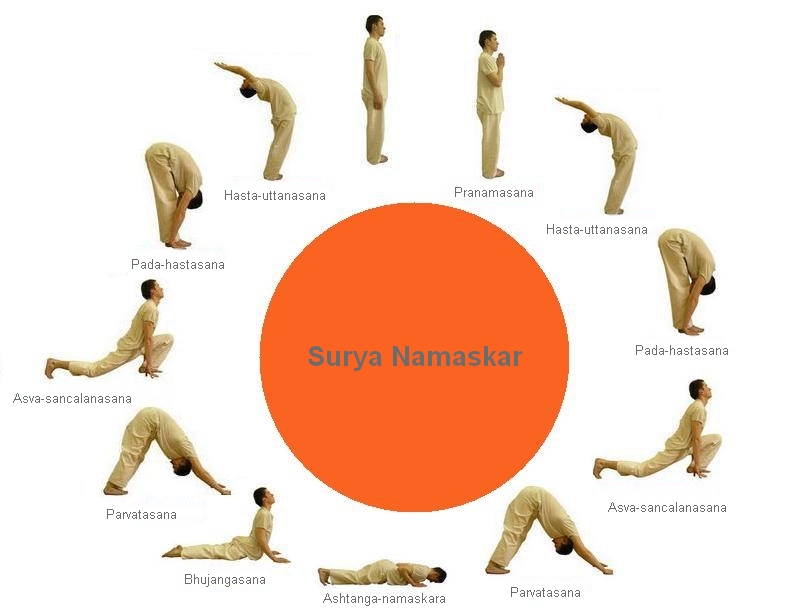
Nowadays Yoga is very popular in Western countries. Yoga is a wide term which is usually used for physical, mental and spiritual practices. It has been practised for centuries on Indian subcontinent. Some of the famous Bollywood actors and actresses promote yoga and use it to stay fit - For example Kareena Kapoor and Katrina Kaif. Here you can see 2 simpler yoga exercises - Suryanamaskar and Kapalabhati - which can help you tone up your body. Remember to drink a lot of water and try to stay away from junk food. Your body will be grateful for such a lovely treat and you will feel better in general.

~°~

What is Suryanamaskar?
...also known as Sun Salutation. It is a sequence of movements that is in a traditional Hindu context performed facing the sun. Here is a brief summary of the movements: 

Surya namaskar

What is Kapalabhati?
 ... a yogic system of body cleansing techniques. It influences the brain and small brain in a good manner. It involves short and strong forceful exhalations and inhalation happens automatically. In the following video you can check how the exercises look:

Indian Jewelry

Spice up your daily clothes with some Indian style jewelry!
Combining Western style clothes with Indian traditional jewelry does not necessarily has to look weird or unusual. Some traditional jewelry will fit just as good. Some might need your personal touch to be joined with your own style while other could be made at home, completely according to your own preference.
~°~

Traditional Indian jewelry will mostly be made of gold, silver and other expensive metals and gems. Usually the jewelry will be very sparkly. Yellow (gold), red and green colours will be dominant but if you are making jewelry for yourself or you can get it custom made, you can ask for other colours too. Modern style Indian jewelry will also be of other colours too nowadays. Indian jewelry can be put on hands, ankles, fingers, nose, ears, head etc. While in Western countries we can see people with pierced eyebrows, bellybuttons and other parts of body, this is rare in India.

Bangles
Bangles are thin round metal or glass bracelets. Glass ones can sometimes be slightly more expensive but they look very lovely because they can be sparkly and transparent at the same time! One should also be very careful while wearing them and taking care of them as they are more likely to break. Metal bangles, on the other hand, are easier to maintain and they last longer. Their price will depend on the metal type and decoration.
Bangles are usually bought in sets. For example, a set of 12 bangles bought on Indian streets can costs around 0.5$. Keep in mind that Indian women will wear bangles on both hands at the same time and the bangles will be equally distributed on them. This is why you can also buy ready-made sets of bangles of different colours for both hands. However, you can buy few simple sets and combine your own custom-made set.
It is often heard in India that having bracelets on only one hand does not look pretty but in Western countries it looks just fine, if not very fashionable. One creative method of making your own set of bracelets is to put all the bracelets into one bag and mix them. Dip your hand into it and put bracelets on it without looking. The results can be amazing!

Bangles - Indian thin metal bracelets
Metal and Glass Bangles Bought in India
Many Bangles Mixed Together
Custom Made Bangles Set
Bindi
See this link for more information about bindis - Perfect Bindi and How to Get Bindis.
Bindis are originally not jewelry, rather a decoration - something like make up or body painting. Bindi is a round shaped (often red) dot coloured between eyebrows - where the third eye or 6th chakra is believed to be situated. Only Hindu women in India will wear them. Such "painted" bindi will be worn by Hindu men as well. With time it became a fashionable jewelry for Indian women. Therefore, nowadays we have sparkly, glittery, gem-kind of bindis.
Bindi
Bindi


  Jhumka
Jhumkas are Indian dome-shaped earrings. As they are often made of gold and gems, one should be careful while wearing them because they tend to be very heavy. If they are worn too much, ears can stretch. Traditional gold jhumkas can be combined with formal clothes. For a normal, every day look you can make them by yourself by decorating any dome-made shapes and adding little beads. Small simple silver jhumkas look very elegant as they remind of raindrops.
Jhumka - Indian Earrings
Jhumka
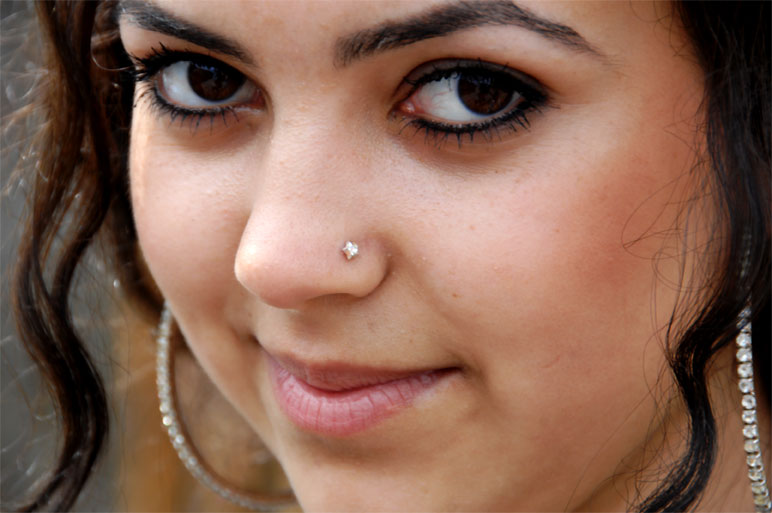
Nose Piercing
One of the most characteristic feature of Indian women is nose piercing. While in Western countries one should have permission to do it before they are 16 years old, girls in India will usually get their nose to be pierced at very early age. Most women will pierce their left nostril. Left side of the human body is believed to be female. According to Ayurveda, left nostril is related to women's reproductive organs and therefore, a women with her left nostril pierced will have easier childbirth and less gynecological problems in general.
From another perspective, nose is a main part of one's face and that is why people decorate it. When India used to be invaded by people from another countries who were not of Hindu religion, they would cut off noses of murtis (sculptures) of Hindu gods and godesses. A person without their nose is incomplete and decorated nose can enhance their beauty.
In Western countries pierced nose is a sign of a rebel. In India however, as you can see, it has a whole another meaning. Even in Western countries pierced nose can look very fashionable and elegant. If you already have your nose pierced or will go for it, you can never go wrong with a simple gem kind of jewel as it can be worn in all occasions.
Nose piercing in India
Nose Piercing

...if you are not able to buy original/traditional Indian jewelry, here are some similar looking pieces you can definitely find in your own jewelry collection and add them up to your daily clothes to fresh up your style! Some of them can be even made at home. We have already given few tips about that in this article and on our blog. We hope this inspire you to mix Indian style more with your own style.

Bangles - Bracelets
Bangles
Round shaped earrings with beads
ANKLET
Anklet

Monday, December 16, 2013

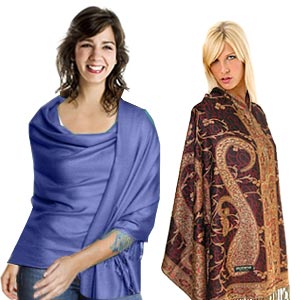
Indian Fashion : Shawl

You do not need to be dressed up in a sari or in some other Indian dress to wear a shawl. It looks just as great on modern jeans or leggings and just as elegant on any simple tight t-shirt. You can make it more SPICY by adding a bindi and big or sparkly earrings.
Sari
~°~

Shawl on leggings

Shawl on simple black tight t-shirt

Shawl styles


Shawl on a dress

Shawl on blue jeans


Sunday, December 15, 2013

Indian kitchen?

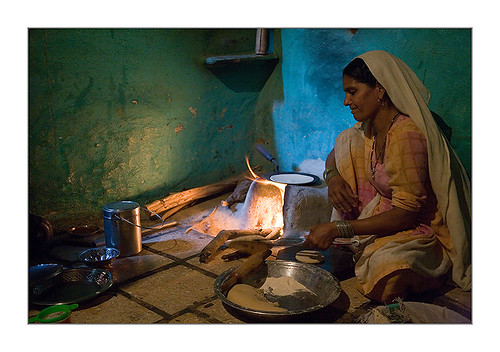
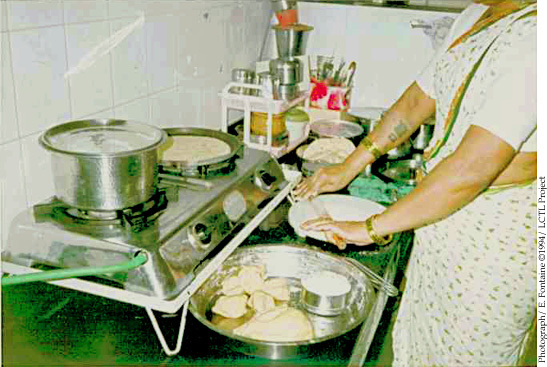
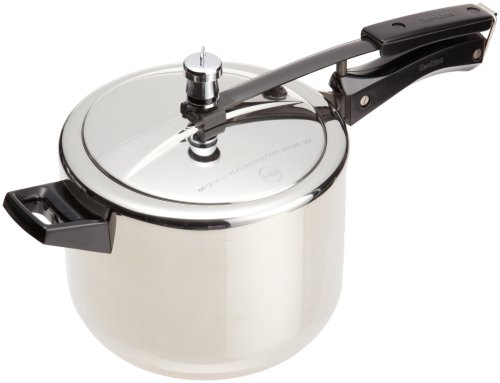
So probably you have noticed Indians do not prepare food in the oven much or bake cakes in the oven. How come? Well, it is simple, their kitchens look a bit different. Here are some pictures of typical Indian kitchens, utensils and thing you can find in their kitchens.
~°~

Indian woman preparing a meal

Indian woman cooking outside

Indian chef

Tandoor
Water purifier
Water purifier

Chakla and belan

Okhli

Pressure cooker

Thali plate

Thali plate


Thursday, October 10, 2013

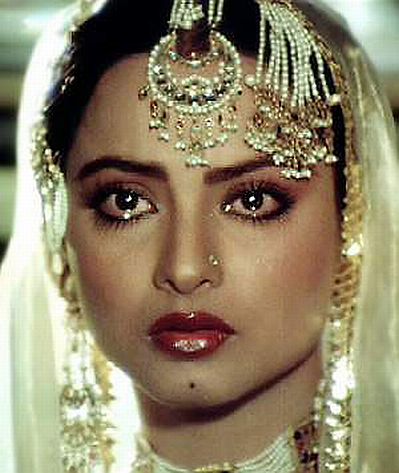
Happy Birthday Rekha!


Today is Rekha's 58th birthday!

Rekha has been an actress since 1966. She is the first Umrao Jaan. The next Bollywood film she will appear in is Krrish 3 - sequel of Krrish 2 and Koi Mil Gaya.
HAPPY BIRTHDAY!


Rekha - a recent photo
Rekha as Umrao Jaan
Rekha - a Bollywood Actress

Tuesday, October 8, 2013

Perfect Bindi and How to Get Bindis

Bindis are nowadays more and more fashionable. A lot of celebrities from Western countries have recently start to wear bindis. There are many various shapes of bindis today. Bindi is believed to enhance the real beauty of a woman and makes her look elegant. bindis were originally painted dots between eyebrows but nowadays one could say it became a jewelry. You can read more about bindis in the following article - Indian Jewelry.

~°~
Here are the rough directions about what kind of bindi would be suitable for you according to your face shape. It does not mean you cannot use any other shape! You can use any bindi you like. These tips are similar to picking a hair style according to your face shape. Of course, if a hair style can change your face shape as well - you might even need another type of bindi. However, do not worry about this at all - if a bindi is well combined with your clothes - you can achieve very fashionable and elegant look without following these instructions.

If your face is oval shaped - Congratulations! Any bindi would suit you.
Heart shaped girls should go for smaller, simple, one-coulour and elegant bindi.
If you have more round face, longer bindis would make your face longer and more in harmony.
Square shaped should definitely avoid long ones, round ones and square ones. Try to find something that would freshen up your face and milden the harsh lines of your face such as - V shape.
~°~

Check what kind of bindis these celebrities picked to wear.

Selena Gomez
Selena Gomez with a Bindi
Katy Perry
Katy Perry with a Bindi
Miley Cyrus
Young Miley Cyrus with a Bindi
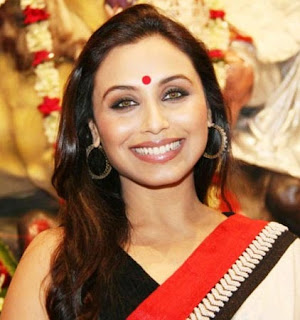
Rani Mukherjee
Rani Mukherjee with a Bindi
Priyanka Chopra
Priyanka Chopra with a Bindi

~ How to get bindis? ~

Bindis of same type are usually sold in packets. You can also buy fancy-looking ones one by one, and these could be sometimes more expensive than buying a whole packet, especially if you will buy them in stores. 
If you do not live in India, you can get them in local Indian shops, by buying them from companies on the Internet or ask your friends from India or travelers to India to get them for you.
Normally you could get 3 PACKETS of simple shaped bindis for 1$ - in one coulour or many colours, with or without glitter and gems. Simple round bindis come quite handy as well if you would like to see how you would look like with your nose pierced.

If you cannot get bindis in any of these ways, here you can learn How to make Bindis at Home!

Bindi packets

Make Your Home More Indian

Tips on how to decorate your home more oriental and Indian.


Colours
~ Golden, red and other vibrant colours are a must. If this is too flashy for your taste, use more gentle pastel colours. Avoid too much of black, white and grey colour. Use them as the colours of patterns.

Colours of India
Shapes
~ Indian home usually has more square shaped furniture, however, it is not a must to have such furniture and no, there is no need to change your furniture if it looks different. Adding a couple of comfortable cushions in Indian colours can already add that Indian touch.

Indian Style Cushions
Decorations
~ Adding symbols or something that reminds of India will do just great!
Here are some of the decorations you can use:
*figurines or pictures of elephants, Hindu deities, lotus flower
*little boxes
*scented sticks
*small Indian carpet in your living room, in front of your doorstep or on the wall

Elephant Figurine

Small Oriental Boxes

Scented Sticks

Decorative Carpet

Aum and Swastika symbols
~ It is believed that the frequency of the vibration of the "Aum" sound is equal to the one of the God or Absolute. It is very popular among Hindu Indians and Westerns. Swastika is a Sanskrit word which would mean "something small that brings well-being" - kind of what we call as a "lucky charm." These would look really nice somewhere near your entrance doors as a Welcome to your guests and your family. If you think some of your visitors might feel uncomfortable around them, try to make the symbols less obvious.

Aum Decoration

Swastika Decoration


Your name in devanagari
~ Learn how to write your name or names of your family members in devanagari and make a painting. Here you can see an article about this Indian Script : DEVANAGARI.

Name "Shakuntala" in Devanagari